When most people think of braces, they picture teens wearing shiny metal brackets and colourful rubber bands. But more adults than ever before are receiving orthodontic treatment. Your smile, bite, and confidence can all be improved with options like traditional braces and adult Invisalign.
The ultimate goals of invisalign and braces are healthier smiles and straighter teeth. But they take a very different approach to it. Making a decision between the two can be challenging, especially when considering factors like lifestyle, comfort, cost, and appearance.
In order to determine which treatment is best for your smile, this guide will assist you in weighing the advantages and disadvantages of invisalign and braces.
Invisalign: The Clear Choice For Discrete Treatment
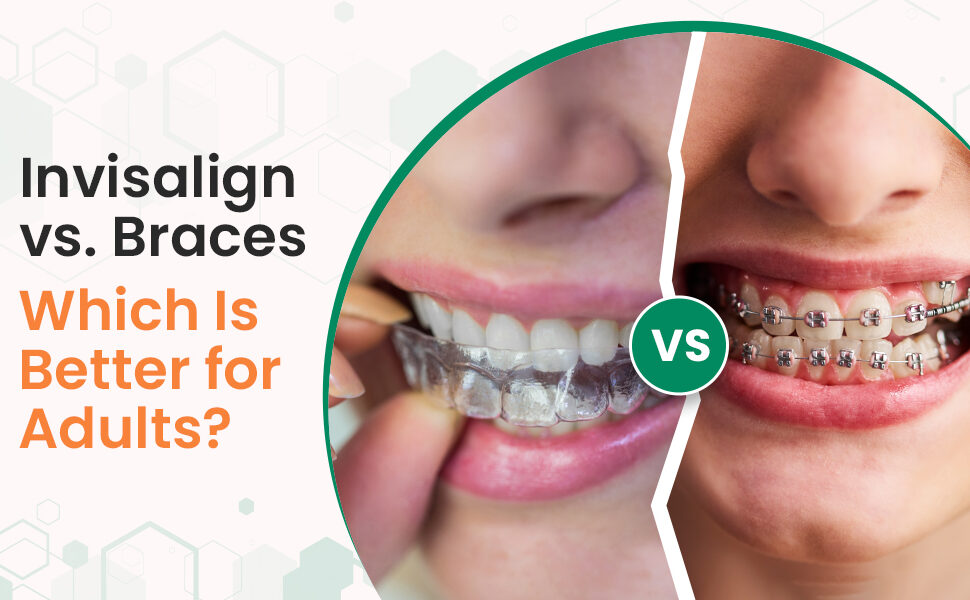
Invisalign has revolutionised the game for a lot of adults. With invisalign for adults, teeth are gradually moved into place using clear, detachable aligners rather than metal wires and brackets.
Benefits of Invisalign for Adults
- Virtually Invisible
Clear plastic trays that mimic your natural teeth are called invisalign aligners. They are a great option for professionals, parents, or anyone else who wants a discreet treatment option because most people won’t even notice you’re wearing them.
- Removable aligners
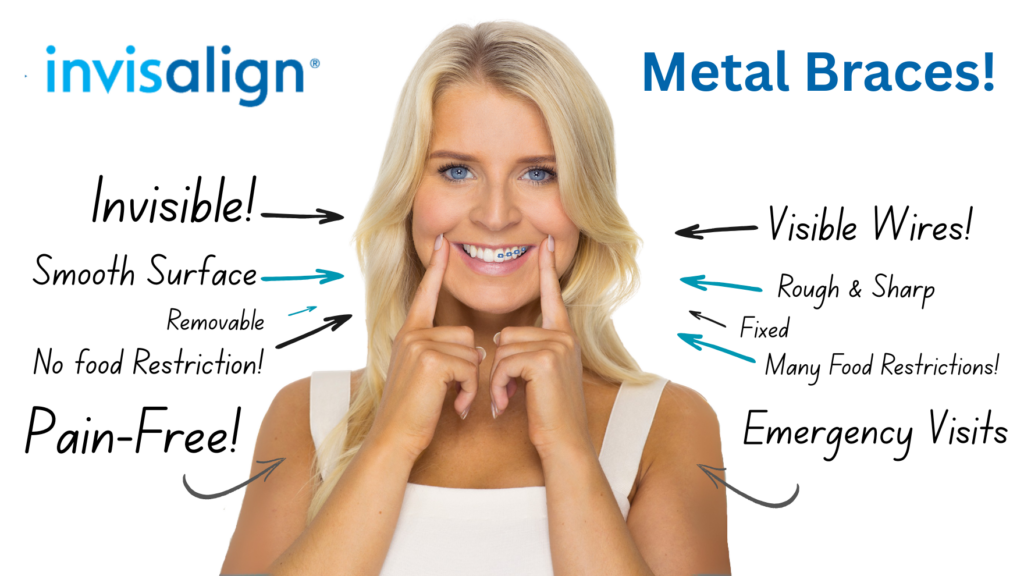
Invisalign aligners are detachable for eating, drinking, brushing, and flossing, unlike braces. This makes it much easier to maintain dental hygiene and removes any restrictions on your favourite foods.
- Comfortable Fit
The invisalign trays are smooth and made specifically for your teeth. They lessen the possibility of mouth sores and irritation from metal brackets or wires.
- Fewer Dental Visits
Compared to braces, invisalign typically requires fewer adjustment appointments. You simply visit your dentist on a regular basis and replace your aligners every one to two weeks.
- No Food Restrictions
You can eat popcorn, nuts, or other chewy foods without worrying about breaking the brackets because the trays are detachable.
Traditional Braces: A Reliable & Effective Option
One of the best orthodontic treatments still in use today, braces have been around for decades. In addition to traditional metal braces, ceramic and lingual braces are now available, and modern braces are smaller and less obvious than they once were.
Benefits of Traditional Braces for Adults
- Effective in Every Situation
Even the most difficult orthodontic problems, such as severe misalignment, crowding, or intricate bite issues, can be resolved with braces.
- No Problems with Compliance
You won’t have to worry about forgetting to wear your braces because they are affixed to your teeth. They are, therefore, a fantastic choice for patients who may have trouble staying disciplined.
- Reasonably Priced Choice
Conventional braces are more affordable than invisalign because they are frequently less costly.
- Occasionally Quicker
Braces may produce results more quickly than Invisalign, depending on your particular situation.
Invisalign Or Braces: Which One Is Right For Adults
Select adult invisalign if you:
- Desire a treatment that is almost undetectable.
- Appreciate how easy it is to take out your aligners to brush or eat.
- Possess mild to moderate orthodontic problems.
- Prefer to see the dentist less frequently.
Select braces if you:
- Have serious issues with bite, overcrowding, or misalignment.
- Don’t want to stress over forgetting to wear my aligners.
- Are trying to find a more economical course of treatment.
The Role of Your Dentist
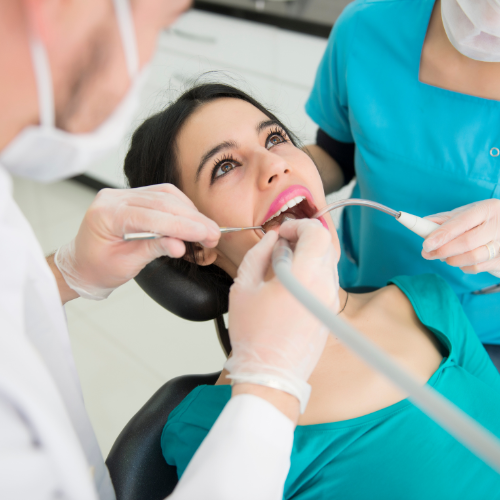
Ultimately, speaking with a skilled dentist or orthodontist is the best way to choose between invisalign and braces. Before suggesting the course of action that best meets your needs, they will assess your teeth, bite, and general oral health.
Nowadays, a lot of dentists show you how your teeth will look after treatment using 3D imaging technology. Before you even begin, this can help you see how your smile will change.
Conclusion
Regardless of the treatment you pursue, invisalign and braces are both tested and proven ways to improve your smile, correct bite problems, and improve your overall oral health. If you are looking for a nearly invisible, comfortable, and flexibly scheduled option that quickly adapts to your daily activities, invisalign is the ideal option. However, in cases with more extensive dental problems, traditional braces are typically favored over Invisalign. Traditional braces are also more predictable and potentially less expensive.
Ultimately, the final decision depends on your needs, your lifestyle, and your financial situation. You should consult an experienced dentist. Your dentist will evaluate your teeth, explain the pros and cons of each treatment, and help you choose options that promote your oral health in the long term.
A confident smile transforms more than appearance; it also improves chewing and speaking, and oral hygiene. With an appropriate plan, you will enjoy a beautiful smile and the benefits for years to come.